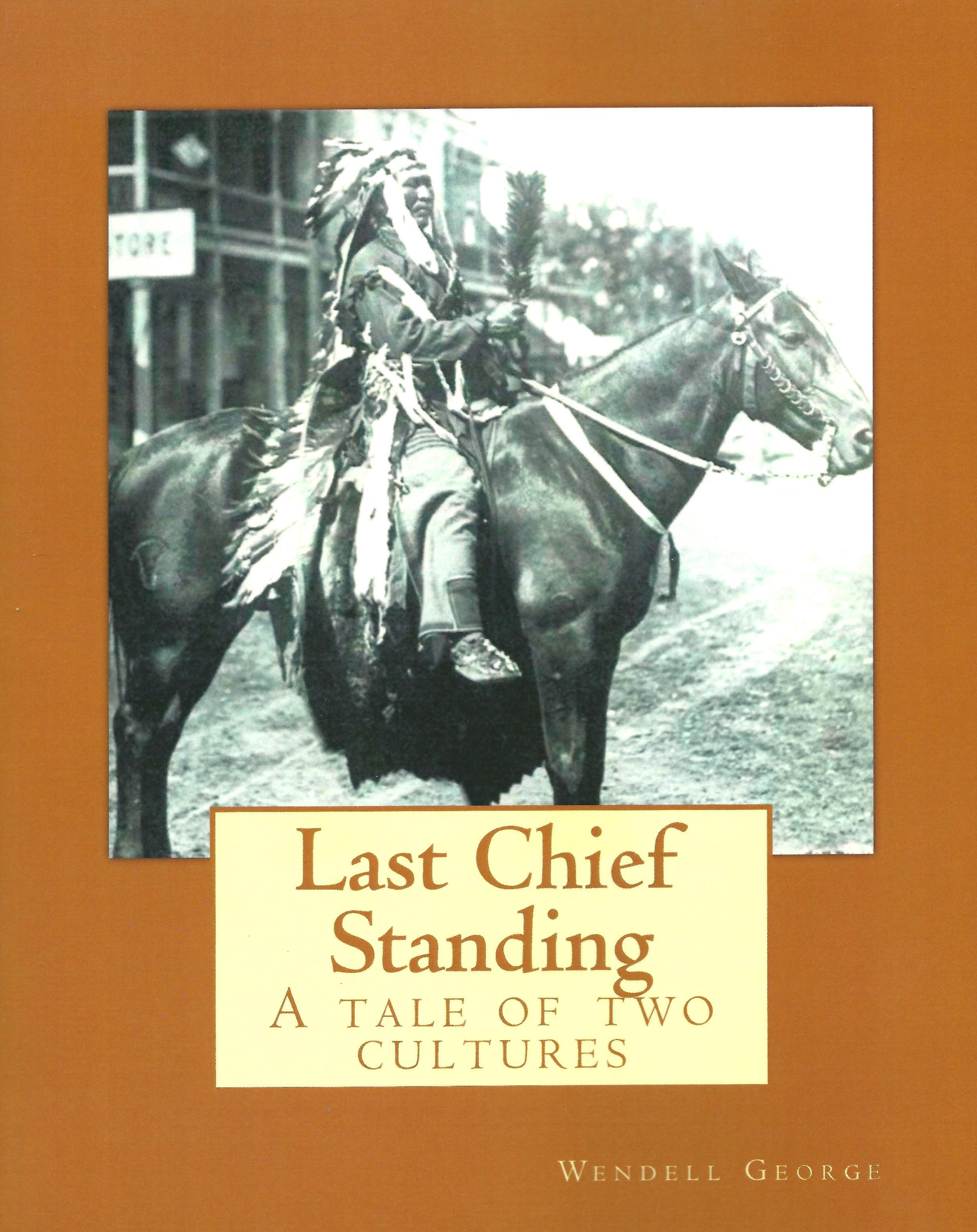
SYNOPSIS OF LAST CHIEF STANDING
This is a tale of two cultures describing how my Indian family moved from nomadic existence into the modern world and resisted extinction.
The Statue of Freedom on top of the Capitol Dome looks like an Indian woman in a helmet covered with feathers. She is an inadvertent memorial to Indians that personifies the subtle way our culture has been infused into today’s society.
That is the theme of this book.
The story starts seven generations back and moves into the future generations. It moves through the Manifest Destiny and describes the major changes of my family’s nomadic lifestyle. They eventually were able to merge the old with the new. This was illustrated by my dad who was the last of the family to be born in a tepee and the first to father a college graduate, me.
I returned to the Reservation to help my tribe develop their natural resources. There were many difficulties making the change but our tribe has not only survived but is now flourishing. The economy is no longer a direct line pursuit of food but through full time careers and pay checks. Today we use jet airplanes instead of horses and legal arguments instead of guns. Battles are through negotiation and paper trails. We have come full circle. The Indian Way is coming alive.
Amazon.com: Customer Reviews
Contemporary storyteller: Wendell George, July 25, 2012
By Marlowe G. Sam – See all my reviews
Four Star rating
This review is from: Last Chief Standing: A Tale of Two Cultures (Volume 1) (Paperback)
I am biased in my perspective, as the author, Wendell George is my blood relation. A great ancestral historical overview which was bridged into the contemporary existence of the George Family. It was very obvious that great consideration was given to both historical written literature and the oral narratives of indigenous peoples. The oral tradition of aboriginal peoples came alive to reawaken the spirit of both the people and the land. The Interior Salishan people’s history has been predominately written by our relatives, the white man, and Wendell presented a perspective that should be given serious consideration as students of academia undertake study of the historical events that impacted the recent and current social, cultural, and political realities of Interior Plateau tribes. I consider myself a traditional land and resource user and practitioner of our traditional value systems and was already privileged to know and understand to a certain degree the human/land relationship as described by Wendell George. We as aboriginal people that have occupied this particular ecosystem for thousands of years have developed an intricate knowledge and understanding of our surroundings. I am currently a post-comprehensive doctoral student at the University of British Columbia Okanogan and will be teaching an Indigenous Studies course over the next fall and winter semester. I am listing this book as a published resource for the winter semester. Great job, Wendell!! Later, Marlowe Sam.
 Reaching for the sky!